Laurence King Publishing · 2025
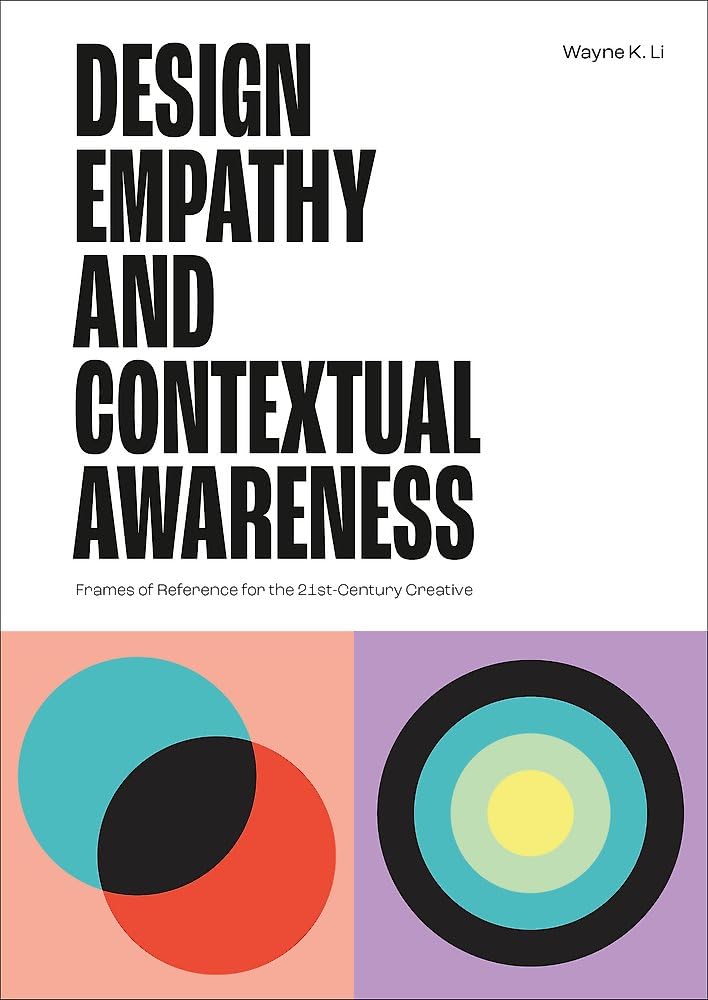
Design Empathy and Contextual Awareness
Frames of Reference for the 21st-Century Creative
By Wayne K. Li
Laurence King Publishing · 2025
Frames of Reference for the 21st-Century Creative
By Wayne K. Li
Great design starts at the “fuzzy front end,” where research methods, business trends and marketing insight come together. This book is a guide to working there well.
It frames design as the practice of holding multiple mindsets, or frames, at once. It covers human-centered design, emotional design and contextual awareness, and offers templates, case studies and exercises you can use right away.
Topics include inclusive and accessible design, sustainable and ethical practice, and how to balance AI with human judgment. The focus is on how designers think, observe and adapt, not only on what they produce.
Design as a whole-brain activity.
Design as a whole-life activity.
Cognitive empathy, emotional empathy and compassionate concern.
Cultivating the designer’s “sixth sense.”
“This book captures so many tools that can be used to design well in community. I can’t wait to teach with it by my side.”
Dr Susie Wise, author of Design for Belonging
Wayne names three things: stories that show how design shapes society, interviews and advice from working designers and educators, and design tools offered in a guided, personal way. Many books describe methods and tools, he notes, but tend toward encyclopedic completeness. This one is about a practitioner’s view of how to apply which tools when, and what the pros and cons of each are.
“Curating a student’s usage of the tools is more important than exposure to each and every last one,” says Wayne.
Design students, young professionals and aspiring entrepreneurs. Wayne draws on business theory such as disruptive innovation and the technology adoption curve, and reframes it for the design practitioner. The book is meant to be accessible to a creative audience, not only to MBAs, and to help readers think like a business owner and approach the choices of mass production with new respect.
Wayne’s aim is to go beyond studying people. The book gives visual, digestible tools that help practitioners apply empathy in practice: developing prototypes and engaging stakeholders, not just researching them. He credits Dev Patnaik and Michael Barry for shaping his own early learning in empathic design research.
Answers are drawn from Wayne K. Li’s author questionnaire for Laurence King Publishing. More to come.
Interviews, features, essays and guest appearances. Wayne is available in English; writing to us is the fastest way to set one up.
Media inquiries, excerpts and photos:
designbloc@agentmail.to